


























Hollywood Has Competition. Kenya, It's Time to Join the Race!
Japanese and Indian films are making waves at the global box office. Can Kenya compete? Discover the lessons for Kenyan filmmakers and how SFS is preparing the next generation.

Japan and India Just Shook the Global Box Office. Kenya, When Is It Our Turn?
Hollywood is not the only place making films the world wants to watch. Japanese and Indian productions are proving that stories from different cultures can command international attention. Kenya, it is time we started thinking bigger.
Imagine walking into a cinema, sitting down to watch a Japanese-language film, and discovering that millions of people around the world have done exactly the same thing.
Now imagine an Indian epic drawing audiences across continents, with viewers buying tickets to experience a story deeply rooted in Indian culture.
This is not a dream. It is happening.
And Kenya needs to pay attention.
Two films. Two countries. One big message for the world.
The global box office had an interesting weekend between November 6 and 8, 2026.
Leading the worldwide rankings was Japan's Godzilla Minus Zero, which generated an estimated US$63 million in its opening weekend. The film earned approximately US$31.6 million in the United States and Canada alone, making an impressive statement for a Japanese-language production released with English subtitles.
Then came India's Ramayana: Rise of a Legend, which generated approximately US$55.7 million worldwide, including previews, during its opening weekend.
These are not small achievements. They demonstrate that audiences are willing to travel beyond familiar Hollywood productions when a film offers an exciting cinematic experience.
According to The Guardian's box office report, Godzilla Minus Zero also achieved a record-breaking opening for a live-action foreign-language film in North America.
There is another interesting detail.
The film generated approximately US$21.3 million through IMAX screenings worldwide. That represented around 34% of its global opening, despite IMAX screens accounting for less than 1% of its total screens, according to IMAX.
Think about that for a moment.
A Japanese production, built around a character whose cinematic history stretches back to 1954, is attracting audiences on a global scale.
India, meanwhile, is taking one of its most recognisable traditional stories and presenting it as a major international cinematic event.
The message is simple: the world is not waiting for every story to come from Hollywood.
And that should excite every aspiring filmmaker in Kenya.
Japan and India are not abandoning their identities to impress the world
One of the biggest lessons here is that these countries are not necessarily succeeding by copying Hollywood.
Japan has spent decades developing its own cinematic identity. Its storytelling traditions, animation industry, visual effects, distinctive genres and globally recognised characters have helped it build a strong international presence.
India has also developed a powerful film culture, with multiple production industries, established stars, large audiences, ambitious productions and stories drawn from its history, mythology and contemporary society.
Consider what Ramayana: Rise of a Legend represents. It takes a story deeply connected to Indian cultural heritage and gives it a large-scale cinematic presentation.
That is an important lesson for African filmmakers.
We do not have to abandon our languages, cultures, traditions, humour, histories or identities to make films that international audiences can enjoy.
Kenya has stories about communities, leadership, family, love, injustice, courage, ambition, wildlife, history and everyday life that deserve to be seen.
We have landscapes that can provide extraordinary cinematic settings. We have talented actors, writers, directors, cinematographers, editors, sound professionals and visual artists.
What we need is the ambition, investment, professional development and industry infrastructure to bring these stories to the screen at a consistently high standard.
Kenya, we have stories. So what is stopping us?
Let's be honest.
Kenya is not starting from zero.
Films such as Nairobi Half Life, Supa Modo and Rafiki have helped demonstrate that Kenyan stories can attract international recognition and contribute to wider conversations about African cinema.
Our filmmakers have already shown creativity, resilience and the ability to tell stories that connect with audiences beyond our borders.
The Kenya Film Commission also recognises the country's pool of skilled production professionals, modern camera and audio equipment, editing facilities and growing visual effects capabilities.
So, the question is not whether Kenya has talent.
The question is whether we are building an industry capable of consistently turning that talent into films that can compete commercially and creatively.
And that requires more than buying expensive cameras.
It requires better screenplays, stronger production planning, professional directing, excellent cinematography, convincing performances, good sound, thoughtful editing, effective marketing and a distribution strategy.
It also requires investment.
A recent discussion reported by The Standard highlighted some of the industry's persistent challenges, including financing, intellectual property protection, distribution and fair international partnerships.
These challenges are real. We cannot ignore them.
But neither should we allow them to become permanent excuses for producing less ambitious work.
We need to stop thinking small when telling big stories
Imagine a Kenyan science-fiction film set in the future, with Nairobi transformed into a futuristic African city.
Imagine an epic historical production exploring a chapter of Kenyan history that has never received the cinematic treatment it deserves.
Imagine a Kenyan animated feature inspired by African folklore, reaching children in Nairobi, Tokyo, London, Lagos and New York.
Imagine a thriller set in the streets of Nairobi, with a screenplay so compelling that audiences around the world cannot stop talking about it.
Why not?
We have the locations. We have the cultural richness. We have creative minds. We have people who are passionate about filmmaking.
What we must develop is the ability to translate those ideas into complete, polished and marketable productions.
And that begins with understanding the entire filmmaking process.
A beautiful camera shot cannot rescue a poorly written screenplay. Impressive visual effects cannot replace an engaging story. Expensive equipment cannot automatically create convincing performances.
Every successful production requires people who understand their craft and know how to work together.
That is why professional film education matters.
The next generation of Kenyan filmmakers must be prepared
At Spectrum Film School, we believe Kenya's creative future depends on developing filmmakers who understand both the art and the business of cinema.
We are not simply interested in producing people who know how to operate a camera.
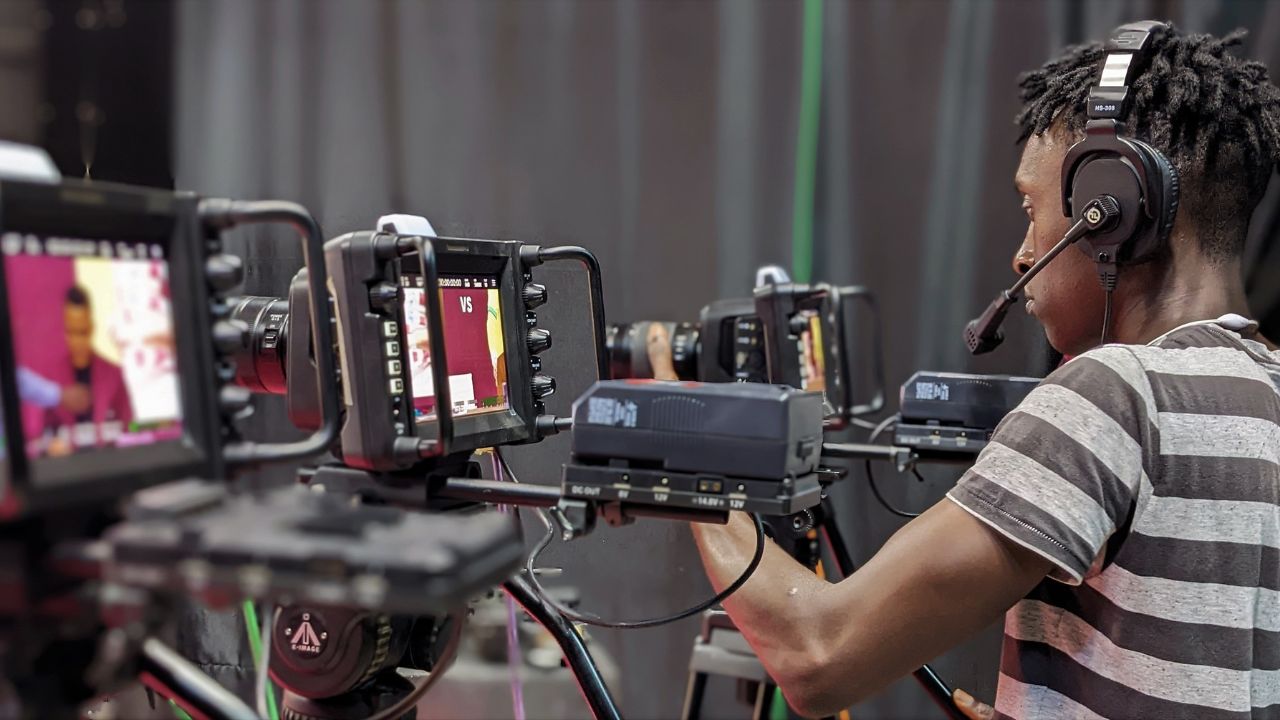
We want learners to understand how a story develops from an idea into a screenplay, how a director communicates a creative vision, how cinematography shapes the audience's experience, how lighting creates atmosphere, how sound builds emotion and how editing transforms individual shots into a compelling film.
Our Film Production Diploma covers key areas of filmmaking, including:
-
Screenwriting: Developing original stories, characters, dialogue and screenplays.
-
Directing: Translating a written story into a clear visual and performance-driven vision.
-
Cinematography: Understanding camera operations, composition, movement and visual storytelling.
-
Lighting: Creating atmosphere, depth, mood and professional-looking images.
-
Editing: Shaping footage into a coherent and engaging final production.
-
Sound design: Understanding how dialogue, ambience, music and sound effects influence storytelling.
-
Film business and distribution: Understanding the commercial side of filmmaking, including production and getting films to audiences.
Most importantly, learners need opportunities to apply what they learn through practical production work, collaboration and creative projects.
At Spectrum Film School, this is the kind of foundation we are committed to teaching.
Explore our Diploma in Film Production.
Kenya needs more than filmmakers. It needs an industry.
There is another lesson we should take from Japan and India.
Their success is not simply about individual directors making excellent films. It is also about the wider ecosystems that help films get produced, marketed, distributed and watched.
Kenya needs more producers who understand financing and business development.
We need screenwriters who can develop original intellectual property.
We need cinematographers, editors, sound designers, production designers, animators and visual effects artists who can deliver professional work.
We need stronger production companies, sustainable financing models, international co-productions, effective copyright protection and reliable distribution networks.
We also need audiences who are willing to support Kenyan productions.
If we want our films to compete internationally, we must first build a culture that values and supports our own stories at home.
Buy the cinema ticket. Watch the local production. Recommend a good Kenyan film. Support filmmakers who are investing their time, money and creativity into telling our stories. Watch Little High- a Kenyan Short film.
An industry cannot grow on applause alone. It needs audiences, investment and opportunities.
So, Kenya, when is it our turn?
Perhaps the better question is: what are we doing today to make sure that turn comes?
Japan did not build its cinematic reputation overnight. India's film industries did not become globally recognised through wishful thinking.
It takes years of developing talent, investing in production, building audiences, protecting creative work and creating opportunities for filmmakers to grow.
Kenya can do it too.
But we must start treating filmmaking as a serious profession, a business and a powerful form of cultural expression.
We must encourage young creatives to learn the craft, experiment, collaborate and produce original work. We must challenge our filmmakers to think beyond the next social media upload and imagine stories that could live on cinema screens, streaming platforms and international film festivals.
And we must invest in the people who will make those stories possible.
At Spectrum Film School, we are teaching the skills that help turn creative ideas into screen-ready productions. We believe the next generation of Kenyan filmmakers should not simply watch the world's biggest films and wonder how they were made. They should learn how to make films of their own.
We do not need to make another Hollywood. We need to build a Kenyan film industry that the world cannot afford to ignore.
The next global box office sensation could come from Nairobi, Kisumu, Mombasa, Eldoret or anywhere in Kenya.
The story is waiting. The talent is here.
Now, let's learn the craft, raise the standard and make it happen.
Ready to tell your story?
Are you passionate about filmmaking, directing, cinematography, editing or screenwriting? Take the first step towards developing your creative skills at Spectrum Film School.
Explore our Diploma in Film Production and submit your application through our online application portal.
Visit Spectrum Film School or contact our admissions team on +254 798 486 790.
Spectrum Film School — Making Learning Fun. Building the next generation of storytellers.